



For sovereign wealth strategists, family offices and global investors weighing exposure to the Gulf, the Saudi PIF tower attack in Riyadh is more than a security headline. It is a direct test of the kingdom’s carefully built reputation as a safe harbor for long-term capital.
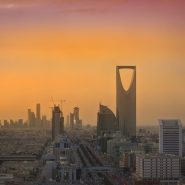
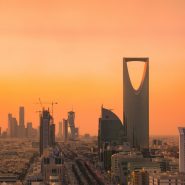
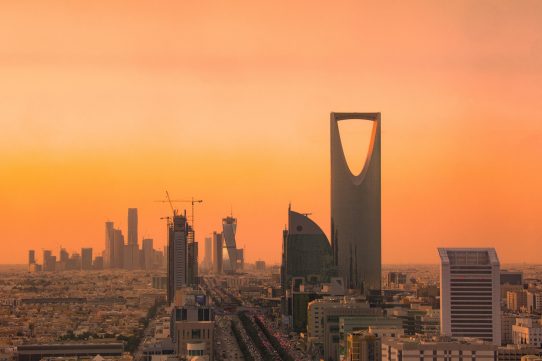
On Thursday, November 19, a Houthi strike hit the 80-storey Public Investment Fund Tower, the tallest skyscraper in Riyadh and the symbolic heart of the King Abdullah Financial District. Saudi Civil Defence said several of the tower’s floors, along with adjacent properties, sustained material damage, with no injuries reported.
The Anatomy of the Strike
According to a Reuters journalist cited by Middle East Eye, glass was blown out across roughly seven to eight floors and part of the metal facade was bent. Gulf News reported that entrances to the district were closed while people were evacuated and emergency crews moved in. Footage from the capital reportedly showed workers replacing panes within hours.
- The Target: The headquarters of a fund that says it manages around $1 trillion in assets.
- The Pattern: The second prominent financial-district building damaged in under two weeks, after an Aramco building was hit on November 8.
- The Official Line: The coalition said it dealt with an incoming missile threat and that falling debris caused the damage.
The Diplomatic Response
Riyadh’s Foreign Ministry condemned what it called attacks on civilian and economic facilities and signaled a firm posture, as reported by Anadolu Agency:
“Saudi Arabia will not tolerate any attack targeting its territory and capabilities.” — Saudi Ministry of Foreign Affairs
The ministry also urged the Security Council’s permanent members to enforce existing resolutions, while stressing that any response would respect international law. Civil Defence alerts for Riyadh and Al-Kharj were later lifted with all-clear notices.
Why Capital Is Watching the Corridor of Power
The King Abdullah Financial District is the showcase of Vision 2030, built to draw regional headquarters, global banks and asset managers to the Saudi capital. A strike on the address of the kingdom’s flagship investment vehicle lands squarely on that narrative of stability. For institutional allocators, the question is not the physical damage, which appears contained, but whether repeated incidents begin to show up in insurance costs, relocation decisions and the risk premiums demanded on Saudi assets.
So far, the response has been swift and orderly: no casualties, rapid repairs and a district reopened to business. That operational resilience matters as much as the headline itself.
The Meridian Verdict
For elite portfolios, this is a moment for discipline rather than retreat. Saudi Arabia’s capital program is measured in decades, and one damaged facade does not rewrite it. Yet two strikes on marquee financial towers in a single month are a signal that geopolitical risk in the Gulf has not been priced out. Sophisticated investors should stress-test Gulf real estate and private market exposure, favor assets with strong insurance cover, and watch closely how quickly multinational tenants recommit to the district.
Stay tuned to Luxury Meridian for continued, high-level analysis of the geopolitical forces shaping global wealth.
Further Reading on Luxury Meridian
- The Conversion Corridor: Scaling a Riyadh Luxury Fashion Boutique on Shopify
- Geopolitical Escalation: Middle East Conflict Intensifies as Iran Strikes Key Jordanian Base
Positioning a brand for this market? Luxury Meridian builds SEO, paid media, social and AI-automation programmes for brands of consequence. Request a free marketing audit or message us on WhatsApp.
Sources: Gulf News, Middle East Eye, Anadolu Agency.



[…] The Tower Under Fire: Houthi Strike Damages Saudi Arabia’s $1 Trillion PIF Headquarters in Riyadh […]