


The first thing any honest guide to buying property in Bali has to say is that a foreigner cannot hold freehold land there. Indonesian freehold, Hak Milik, is reserved for Indonesian citizens. What foreigners can do is take a long notarised lease, hold a registered right-to-use title called Hak Pakai on a qualifying house or apartment, or buy through an Indonesian company with foreign shareholders (a PT PMA) for a genuine rental business. Each route has different costs, risks and paperwork. This guide walks through them in the order a careful buyer meets them, from choosing an area to collecting the certificate.
The three legal routes, side by side
| Route | What you hold | Who signs it | Best suited to |
|---|---|---|---|
| Leasehold | A contract to use the land and villa for an agreed term, commonly 25 to 30 years | Notary (not a land-registry deed) | Holiday homes and most villas sold to foreigners |
| Hak Pakai | A registered right-to-use title in your own name, for living in | PPAT (land deed official), registered at the land office (BPN) | Foreign residents buying a higher-value house or strata apartment |
| PT PMA | The company holds HGB or Hak Pakai, never Hak Milik | PPAT, plus company set-up and licences | Real rental or hospitality businesses |
Be wary of anyone offering a nominee arrangement, where an Indonesian puts the land in their own name “for you”. Those structures give the foreign buyer no secure legal title and are the source of many disputes. Rules also change, so treat this as orientation and confirm the current position with an independent notary or lawyer.
Leasehold: what to check before you sign
A leasehold is the most common way foreigners buy a villa in Canggu, Seminyak, Uluwatu or Ubud. The owner keeps the Hak Milik certificate; you pay, often upfront, for the right to use the property for the term. A sale of the land does not end an earlier lease unless the contract allows it, and neither does the death of the owner. But the lease does end when its term runs out, and without a written extension right the owner can refuse to renew.
- Owner and certificate: the person signing must be the owner named on the certificate; ask who else must consent, such as a spouse or co-heirs.
- Extension option: a clause fixing the extra years and the price, or a clear formula, is worth far more than “to be agreed”.
- Subletting and transfer: both need the owner’s permission, so write them in if you plan to rent the villa or sell the remaining years.
- End of term: state what happens to the buildings you paid for.
- Zoning and permits: confirm the land use allows a dwelling or tourist accommodation, and that the building has its permit (PBG).
Hak Pakai: owning a house in your own name
Under Government Regulation 18/2021, a foreigner with a valid immigration document can hold Hak Pakai on one house, or own a strata-title apartment. Notaries and land offices often still ask for a stay permit (KITAS or KITAP) and a tax number, so check with your PPAT early. Bali sets a minimum purchase price for foreign buyers, reported as IDR 5 billion for a house and IDR 2 billion for an apartment as of late 2026, with a land limit of 2,000 m² unless the ministry allows more. The first term is up to 30 years; how it is extended or renewed depends on whether the land underneath is state land or someone’s Hak Milik, so ask your PPAT which form your purchase creates.
Plan and book your trip to Bali
Live prices from well-known booking sites. Compare before you pay.
- ✈️ Find cheap flights to BaliAviasales
- 🚕 Book an airport transfer in advanceKiwitaxi
- 🚗 Compare car rental prices in BaliLocalrent
- 🎟️ Tours and things to do in BaliGetYourGuide
Disclosure: some of these are affiliate links. If you book through them we may earn a small commission at no extra cost to you.
Where foreign buyers look in Bali
Canggu and Pererenan
Young, busy and rental-driven, with villas close to surf beaches and cafés. Traffic on the narrow lanes is the main daily complaint, and zoning varies plot by plot, so check it carefully.
Seminyak and Umalas
More established, closer to the airport and the south’s restaurants. Umalas offers quieter streets and family homes while staying ten to fifteen minutes from the beach.
Uluwatu and the Bukit
Cliff-top land with ocean views and a premium surf crowd. Roads and utilities are still catching up in some pockets, so confirm water supply and access before committing.
Ubud and surroundings
Green, cooler and calmer, with rice-field views and a wellness focus. Rice land can be protected agricultural zoning, which may block building; this is where zoning checks matter most.
Sanur
Calm beachfront, popular with retirees and families, with a gentler pace than the south-west coast.
The buying process, step by step
- Due diligence: the certificate is checked at BPN, along with zoning, building permits, tax status and possible heirs, before any money moves.
- The agreement: a preliminary sale agreement (PPJB) or a lease draft sets the price, conditions and deadlines. Have it reviewed independently before paying a deposit.
- Payment: use escrow or staged payments released at legal milestones, never cash to an agent.
- The deed: a sale or Hak Pakai grant is signed before a PPAT, in Indonesian with a translation; a lease is signed as a notarial deed.
- Taxes: on a registered transfer the buyer pays BPHTB of up to 5% above a regional allowance, and the seller pays 2.5% final income tax. New builds from a VAT-registered developer add VAT.
- Registration: the PPAT files the deed with BPN, which issues the certificate in the buyer’s name, often within a few weeks.
Budget, roughly, for notary or PPAT fees on top of the taxes; these follow legal caps that fall as the price rises. Ask for a written fee quote before you start.
Before you fly over to view
Most buyers fly into I Gusti Ngurah Rai Airport (DPS) and spend a week viewing. Book a driver for viewing days, since villas in Canggu, Uluwatu and Ubud are an hour or more apart in traffic. Ask agents for the certificate number, zoning letter and permit copies before the visit so your notary can start checks immediately.
Buying property in Bali works well when you accept the legal framework rather than look for shortcuts: a well-drafted leasehold or a properly registered Hak Pakai, independent due diligence and staged payments. Luxury Meridian is not a broker, but if you want help shortlisting areas or organising viewings, message us on WhatsApp.
Handy booking links
✈️ Find cheap flights to Bali🚗 Deals from international rental brands
Buying property in Bali: common questions
Can foreigners own freehold land in Bali?
No. Freehold (Hak Milik) is for Indonesian citizens. Foreigners use a notarised leasehold, a registered Hak Pakai title on a qualifying house or apartment, or a PT PMA company for a real business.
How long is a typical Bali leasehold?
Commonly 25 to 30 years, though the law sets no fixed maximum. A written extension option with a fixed price or formula is important.
Is there a minimum price for foreigners buying with Hak Pakai?
Yes. Bali's minimum was reported as IDR 5 billion for a house and IDR 2 billion for a strata apartment as of late 2026. Confirm the current figure with your PPAT.
What taxes does a buyer pay?
On a registered transfer, the buyer pays BPHTB of up to 5% above a regional allowance, and the seller pays 2.5% final income tax. A lease has no BPHTB, but the landowner is taxed on the rent.
Is a nominee arrangement safe?
No. Putting land in an Indonesian's name on your behalf gives you no secure legal title and is a common source of disputes.
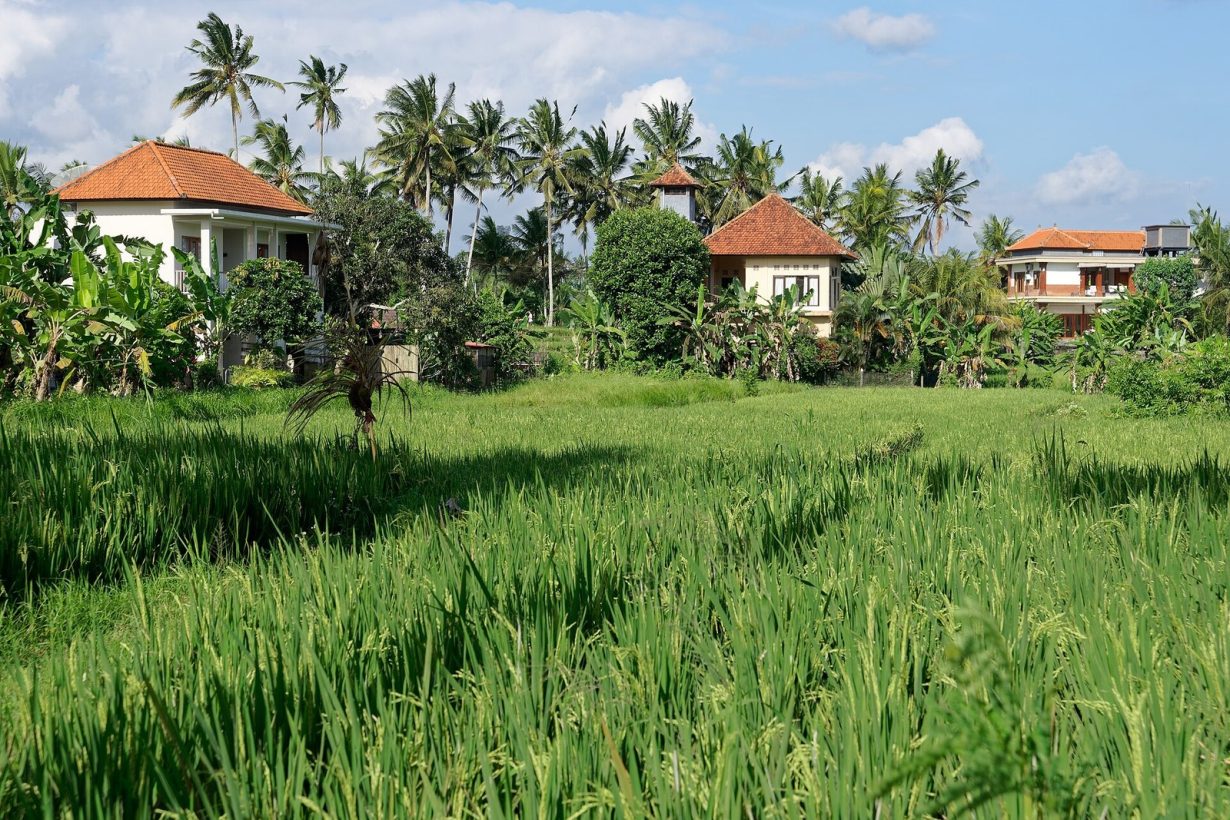
Image: Paddy fields and houses in Ubud, Bali, Indonesia, 20220822 1453 0152 — Jakub Hałun, Wikimedia Commons (CC BY-SA 4.0), cropped